
Your competitor’s marketing director spent 18 months building external presence in sources AI trusts. Your team published blog posts that AI ignores. Guess who owns the category definition now.
User asked ChatGPT: “Who are the leading companies in [your market category]?”
AI listed 5 companies. Your competitor was described as “an established leader”. Two other competitors were mentioned.
Your company: not mentioned. Not listed. Not in AI’s explanation of the market you compete in.
You have more customers. Longer track record. Better retention rates. But AI learned your category from a Wikipedia page listing a competitor as an example company, Crunchbase tags the competitor correctly while miscategorizing you, and 8 industry publications over 2 years that quoted the competitor to define market trends.
AI didn’t learn from you because you never built a presence in the sources AI consults to understand markets.
Here is what happened: Your competitor’s marketing director spent 6 hours monthly for 18 months building relationships with 4 trade publication editors. Got quoted regularly. Built a systematic media presence. Wikipedia editors creating a category page cited those articles. Crunchbase got updated. AI learned market definition from external sources, citing competitors.
Your marketing team focused on website content, social media, and email campaigns. Zero investment in external knowledge sources. Perfect execution on channels that don’t train AI market understanding.
This is Article 6 in “The Invisible AI Tax: What AI Sees That You Don’t”. We’ve covered technical failures, product data gaps, and review strategy. Now we address the governance gap: Who controls your brand narrative across knowledge sources, and how does AI training reflect what your market is and who matters in it?
Here is the paradox: The more you invest in your owned content, the less AI trusts you. Your $150,000 website redesign, your 40 blog posts per quarter, and your perfect messaging consistency across owned channels mean nothing to AI because AI does not believe what you say about yourself. AI believes what independent sources verify about you. You control your narrative. External sources you do not control determine whether AI believes it. The companies dominating AI recommendations are not the ones with the best websites. They are the ones with the best external validation.
AI Learns Markets From External Sources, Not Your Website.
AI reads Wikipedia category pages that define the market and list example companies. Crunchbase categories tagging who competes with whom. Industry trade publications define trends and quote experts. Business databases like Bloomberg and PitchBook for verified company data. Conference speaker lists showing who the industry recognizes as authorities. Your website comes last, even though it’s the most current.
This is not a technical limitation. This is a trust architecture.
Your website is what you SAY. You claim, “We’re the leading customer data platform”. That is marketing copy from a biased source.
External sources are what OTHERS SAY. Wikipedia requires independent citations from reliable publications. Trade publications have editorial standards and fact-checking. Crunchbase aggregates verified business data from multiple sources. Conference organizers curate speakers based on industry recognition and peer validation.
AI trusts consensus from independent sources over self-description. Always.
Stop.
Your team probably celebrated 50 published blog posts last quarter. AI learned nothing from them because blog posts are owned content and make unverifiable claims.
Your competitor was quoted in 3 trade publications. AI learned they are a category authority because independent sources validated their expertise.
Most content marketing teams are building assets that AI ignores.
The schema vs. knowledge graph distinction nobody explains properly:
Schema is structured data YOU add to your website that tells AI, “We are a customer data platform, we cost $X, we do Y”.
Knowledge Graph is what AI KNOWS about you from combining your schema WITH Wikipedia category definitions, Crunchbase tags, news coverage, industry database entries, analyst reports, and thousands of other external sources.
When your schema says “customer data platform” but the Wikipedia category page for CDPs does not list you, Crunchbase tags you as “marketing automation,” and industry publications have not quoted you about CDP trends in 18 months, AI trusts external consensus over your self-categorization.
Your schema is a claim. External validation is proof.
Real example of how this plays out:
SaaS company positioned as “revenue intelligence platform”, an emerging category they helped pioneer. Created extensive website content about revenue intelligence. Comprehensive blog with 40+ articles. Product positioning pages. Category definition resources. Perfect schema markup.
Wikipedia initially had no revenue intelligence page. When editors created the category stub 9 months later, the company was not listed as an example. Crunchbase tagged them as “sales analytics” based on the old categorization. Industry publications covering the emerging revenue intelligence category quoted three competitors that had been systematically building media presence.
When prospects asked AI, “What is revenue intelligence?” AI cited a competitor mentioned in 3 trade publications and referenced on the Wikipedia category stub as a pioneering example.
Original pioneer who actually created category terminology: invisible to AI because they never built presence in external sources AI uses to learn market definitions.
The company created perfect owned content. The competitor built external validation. AI trusts validation over claims.
Market positioning is not what you say about yourself. Market positioning is what external authoritative sources say about you. If those sources say nothing, you have no position regardless of your messaging.
Wikipedia Defines Categories. You’re Probably Not In Them.
PR is no longer reputation management. It is AI training data engineering.
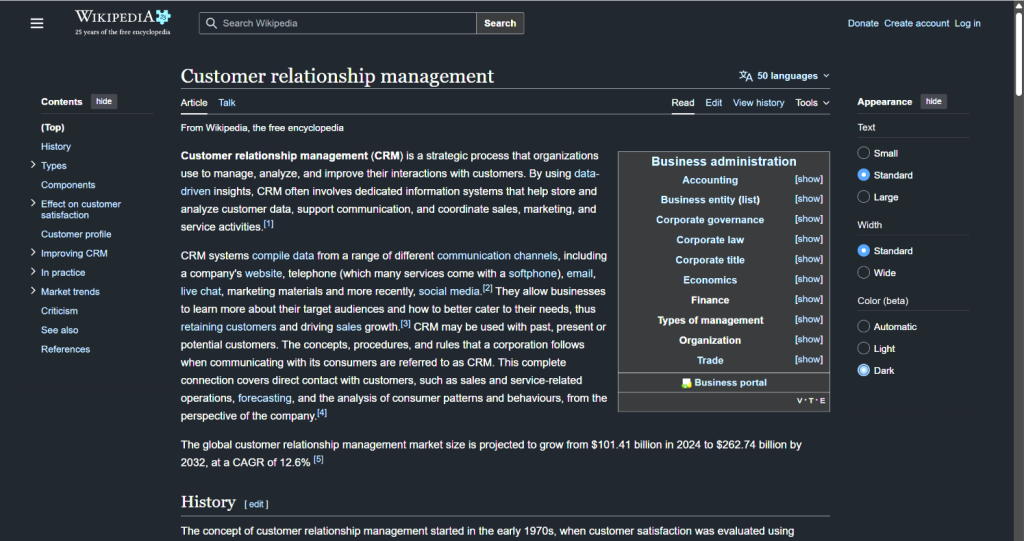
Wikipedia is a category definition infrastructure for AI.
Research analyzing over 1 million AI citations found ChatGPT cites Wikipedia 47.9% of the time when explaining concepts, markets, or companies. When AI needs to define what a market category IS, Wikipedia is the single most authoritative source consulted.
This is not a preference. This is a structural reality of how AI systems build knowledge.
The category visibility problem:
Your market category probably has a Wikipedia page. Search “[Your Category] Wikipedia” right now.
Does the page list example companies in that category? Are you one of them? Are competitors listed instead?
If you are absent, Wikipedia is training AI daily that your category exists, but you do not participate in it. Every time someone asks AI about your market, they learn a category definition that excludes you.
Why you are not listed, and competitors are:
Wikipedia editors do not accept companies saying, “Please add us to the category page.” They require citations from independent, reliable sources showing your company is a notable example worth including in the category definition.
What Wikipedia accepts as “reliable sources”:
Major business publications with editorial standards: Wall Street Journal, Bloomberg, Forbes editorial content. Industry trade publications: publications specific to your vertical with fact-checking and editorial oversight. Academic papers and research studies are published in peer-reviewed journals. Conference proceedings from recognized industry events. Analyst reports from established research firms. Books about the industry are published by traditional publishers.
What Wikipedia explicitly rejects:
Press releases, regardless of who distributes them. Sponsored content or paid placements even in major publications. Your blog, website content, or owned media properties. Social media posts, including LinkedIn articles. Directory listings and database entries you control. Any company-created materials without independent verification.
The distinction matters enormously because most companies generate coverage that Wikipedia cannot cite.
Your competitor got listed on the category Wikipedia page because:
They were quoted in 4-6 industry trade publications over 18 months as category experts, explaining market trends. Articles were subject to editorial oversight, independent reporting, and fact-checking. Wikipedia editors updating or creating a category page cited those articles as evidence that the competitor is a notable market participant.
You did not get listed because:
Your media coverage consisted of press releases about product launches, customer announcements, and funding news. Wikipedia editors cannot cite press releases as reliable sources. You were never quoted as a category expert in publications meeting Wikipedia’s reliability standards.
You published extensive thought leadership on your blog. Wikipedia cannot cite owned content as an independent source.
You got mentioned in sponsored Forbes contributor posts and paid placements. Wikipedia explicitly excludes sponsored content from consideration in citations.
Your coverage had a higher reach measured in impressions. The competitor’s coverage had the citation authority Wikipedia requires. Reach does not equal authority.
The mid-market advantage nobody talks about:
You do not need Wall Street Journal coverage to get Wikipedia citations. Industry trade publications work perfectly if they have editorial standards.
Publications like Industry-specific magazines with 40,000+ circulation and fact-checking processes. Category-focused publications covering your specific market segment. Regional business journals with editorial oversight. Vertical-specific technology or business publications serving your industry.
These publications are actively seeking expert sources for articles. They need people who can explain market trends, provide data insights, and offer informed perspectives on industry developments. The marketing director can build these relationships systematically.
Getting quoted 1-2 times quarterly in 3-4 relevant trade publications over 18 months creates sufficient coverage for Wikipedia editors to cite when maintaining category pages.
The systematic approach that actually works:
Identify 4-6 trade publications your target buyers read. Find 2-3 writers at each publication who cover topics related to your category. LinkedIn research shows their coverage areas and recent articles.
Provide value before asking for anything. Comment thoughtfully on their articles. Share their content with substantive additions. Respond to journalist requests on platforms like HARO and Qwoted. Offer proprietary data or research insights when they are writing about relevant trends.
After 2-3 value exchanges establishing you as a knowledgeable source, offer: “I noticed you cover [topic area]. We just analyzed data on [specific trend]. Would this be useful context for the piece you are working on?”
Time investment: 6-8 hours monthly. Marketing director or founder-level involvement.
Cost: Zero beyond time. Trade publications do not charge for editorial coverage.
Result: Get quoted 1-2 times per quarter as a category expert. Over 18 months, accumulate 8-12 substantive articles where you are cited, providing a market perspective. That is Wikipedia-worthy notability, demonstrating you are a recognized authority in your category.
This is not expensive. This is a systematic execution that most companies never attempt because they do not understand that Wikipedia determines AI’s category knowledge.
Your Brand Exists in External Sources. The Data Is Wrong.
You rebranded 18 months ago. New market positioning. New messaging. New visual identity. Invested $150,000 in website redesign, updated collateral, and revised sales materials.
Check what AI says about you right now. Probably still describes you using old positioning from before the rebrand.
Why external knowledge sources are never updated:
- Wikipedia page if you have one: Last edited 2+ years ago before rebrand. Still describes old market category, pre-pivot positioning, and outdated product focus.
- Crunchbase profile: Category tags from 3 years ago when you competed in a different adjacent market. Employee count range shows 25-50, even though you are now 85. Funding information is incomplete, missing the most recent round.
- Industry databases and directories: Still list you in old categories. Descriptions copied from the archived About page before messaging changed. Nobody monitors these for accuracy.
- Google Knowledge Graph: Associated with old market terminology and category tags. Relationships are mapped to an outdated competitive set.
- Trade publication archive articles: Coverage from 2-3 years ago, describing what you used to do, gets cited by AI more frequently than recent positioning because older articles have more backlinks and authority signals.
The brand governance blind spot that costs you positioning:
Your marketing team updated everything you control. Website messaging is perfectly aligned. Sales collateral reflects new positioning. Social media profiles are on-brand. Email templates use the new messaging framework. Internal communications are consistent.
Your marketing team did not update things you do NOT directly control. External databases, because you did not know they mattered for AI understanding. Wikipedia citations, because you cannot directly edit your own page. Media coverage is being cited because older authoritative articles still outrank recent changes. Crunchbase category tags, because nobody on the team owns monitoring the accuracy of the business database.
Result: Perfect brand consistency across every channel you control. Complete inconsistency everywhere AI actually looks for verification.
When prospects ask AI about your company, AI cites a Wikipedia entry with outdated positioning, references Crunchbase categories that are wrong, quotes analyst coverage from before the pivot describing the old focus, and summarizes trade publication articles explaining what you used to sell.
Your $150,000 brand investment reaches existing customers who already know you and visit owned properties. Completely invisible to AI systems, shaping how new prospects discover and understand you for the first time.
Real cost of external data inconsistency:
The company pivoted from “marketing automation” to “customer data platform” 2 years ago. Complete rebrand. Updated website, all messaging, positioning documents, and sales training. Launched the CDP product line. Deprecated most marketing automation features.
Crunchbase is still tagged “marketing automation” because no one has claimed the profile or updated the categories. The Wikipedia page is sparse but describes the company as “marketing automation software” based on 2019 coverage. Trade publication articles from before the pivot still ranked when searching for the company name and were cited by AI as the current capability description.
When prospects researching CDP solutions asked AI, “Who are customer data platform vendors?” this company was excluded from the results because external sources categorized them as marketing automation.
When prospects asked AI specifically about this company, AI described it as a marketing automation provider based on Crunchbase tags and Wikipedia entries, even though the company no longer sells marketing automation.
Estimated impact: 15-20 qualified CDP leads monthly went to competitors because AI excluded this company from the category or described them incorrectly when asked directly.
Fix required: Claimed Crunchbase profile, updated all category tags and descriptions. Pitched 3 trade publications about pivot and CDP positioning, secured coverage explicitly describing the new focus with quotes about the CDP market. Used the Wikipedia talk page to request an update with new trade publication citations as references.
Timeline: 6 months to align with external sources.
Result: AI began including the company in CDP vendor recommendations. Prospects asking about the company received accurate current positioning rather than outdated categorization.
The brand governance lesson: Your brand exists where prospects first encounter it. That first encounter increasingly happens through AI systems that consult external validation sources rather than their own content. If external sources contain outdated information, your rebrand has failed, regardless of how perfect the execution on owned channels is.
Brand governance requires external knowledge governance. You cannot control Wikipedia directly. You can systematically ensure coverage exists that Wikipedia editors can cite when updating your entry.
Crunchbase Matters More Than You Think
Crunchbase is a business facts database that AI uses for verification and categorization.
Most companies claimed a Crunchbase profile once, but haven’t updated in 2+ years. Marketing does not monitor it. Operations does not know it exists. Nobody owns ensuring accuracy.
What stale Crunchbase data costs:
Wrong category tags: Shows “marketing automation” from 2019. You pivoted to “customer data platform” in 2022. AI excludes you from CDP searches and includes you in comparisons to the wrong categories, where you no longer compete.
Outdated employee count: Shows “11-50 employees” from 4 years ago. You are now 85. AI recommends you for “small vendor” searches and excludes you from “established vendor” comparisons, where enterprise buyers filter for proven scale.
Incomplete funding: Last round listed is Seed at $2M from 2018. You raised Series A of $12M in 2022, but never updated. Investors doing AI research see an outdated cap table. Partners evaluating stability see wrong stage signals.
Missing products: Launched 2 major product lines in the past 18 months. Crunchbase description still references only the original product. AI explaining your capabilities cites an incomplete portfolio.
Each piece of stale data actively trains AI to categorize you incorrectly, describe you incompletely, and recommend you in the wrong contexts while excluding you from the right ones.
The fix requires 30 minutes quarterly:
Claim your profile. Update funding immediately when rounds close. Adjust employee count every 6 months. Review category tags quarterly. Add new products, acquisitions, and locations as they happen. Update the logo, website URL, and social profiles if they have changed.
Ownership assignment:
- Marketing: Category tags, description, positioning alignment.
- Finance: Funding data accuracy.
- Operations: Employee count, office locations.
- Marketing director: Quarterly calendar reminder.
Accurate Crunchbase ensures every investor, journalist, partner, and AI system researching you sees current data rather than propagating outdated categorization across the entire ecosystem.
Building Entity Authority With Accessible Resources.
You do not need enterprise budgets or expensive agencies. You need systematic execution.
Strategy 1: Build trade publication relationships through consistent value.
Mid-market companies have an advantage; trade publications need expert sources more than they need your ad spend.
Identify 4-6 publications your buyers actually read. Industry-specific trades serving your vertical. Category-focused publications covering your market segment. Regional business journals with industry coverage. Vertical-specific technology or business publications.
Find 2-3 writers at each publication covering topics related to your expertise. LinkedIn research shows their coverage areas and recent articles.
Provide value before asking for coverage. Comment on their articles with substantive insights, not promotional fluff. Share their content, adding elements that demonstrate domain expertise. Respond to journalist requests on HARO, Qwoted, or similar platforms when they need sources in your area. Offer proprietary data, research findings, or customer insights when they are researching relevant trends.
After establishing yourself as a valuable source through 2-3 interactions, make a direct offer: “I noticed you cover [specific topic]. We just analyzed [concrete data] on [relevant trend]. Would this be useful context for the piece you are working on?”
Time investment: 6-8 hours monthly. Requires a marketing director or a founder-level person, as you need someone with a strategic perspective and domain expertise.
Cost: Zero beyond time investment. Editorial coverage is not paid placement.
Result: Get quoted 1-2 times per quarter as category expert providing market perspective. Over 18 months, build 8-12 substantive article citations. That creates Wikipedia-worthy notability and trains AI to recognize you as an authority in your field.
Strategy 2: Speak at industry conferences strategically.
Conference speaker lists signal industry recognition. Wikipedia editors cite major conference proceedings as validation.
Target tier-2 conferences in your industry. Not the $5,000 speaking fee keynote events, but accessible conferences where speaking slots are available to companies willing to provide educational content rather than product pitches.
Industry association conferences often need subject matter experts. Regional user groups want speakers on relevant topics. Virtual summit series are constantly seeking presenters. Webinar partnerships with complementary vendors need co-presenters with expertise.
Pitch talks focused on category trends, proprietary research insights, and lessons learned from implementation experience. Not product demonstrations or sales presentations.
Time investment: One conference per quarter equals 2-3 days for preparation plus delivery.
Cost: Travel expenses if in-person, which you can offset if using the conference for prospecting. Virtual events cost nothing beyond time.
Result: Speaker listings become citeable credentials. Industry recognition. Media coverage of conferences frequently quotes speakers. Creates both authority signals and relationship opportunities with journalists covering the event.
Strategy 3: Contribute to industry research and studies.
Academic researchers, industry associations, and media outlets conducting studies need participants.
When survey requests arrive in email, actually participate and share with relevant team members. When researchers need interview subjects for market studies, volunteer. When industry reports request data contributions, provide information anonymously or attributed based on research parameters.
Time investment: 1-2 hours per research contribution.
Cost: Zero.
Result: Research contributors often get cited in published findings. Academic papers citing your contribution are Wikipedia’s gold-standard sources. Industry association reports become authoritative references. Media outlets conducting research frequently quote participants in resulting articles.
Strategy 4: Own external data accuracy through assigned responsibilities.
Small teams need clear ownership, or nothing gets monitored.
Monthly monitoring: Set Google Alerts forthe company name to catch factual errors in coverage or directory listings.
Quarterly maintenance: Review and update Crunchbase (all fields). Check major industry directories for accuracy. Verify Google Business Profile if you have physical presence.
Quarterly check: If you have a Wikipedia page, review for vandalism or outdated information. Cannot edit directly, but can use the Talk page to request corrections with citations supporting accuracy.
Bi-annual audit: Search where your company appears in databases, directory sites, and industry listings. Verify basic facts like category, description, and contact information match the current reality.
Time investment: 2-3 hours quarterly, distributed across marketing, operations, and finance team members.
Result: Catch errors before they propagate. Maintain accuracy in sources AI consults. Prevent outdated information from training thousands of AI responses with wrong data about you.
The realistic resource picture:
You cannot afford expensive analyst participation fees. You CAN afford 6 hours monthly building trade press relationships.
You cannot hire a PR agency charging $10,000+ monthly. You CAN respond to journalist requests and build direct relationships with relevant reporters.
You cannot commission proprietary analyst reports. You CAN speak at industry conferences and contribute to collaborative research.
Entity authority is available through execution, not budget. Most companies never build it because they do not realize it matters for AI visibility. Your competitors who figured this out are compounding their advantage while you create more blog content that AI never cites.
The choice is systematic external validation or continued invisibility in sources that train AI market understanding.
Who Controls Knowledge in the AI Era:
Wikipedia editors shape your market more than your board does.
Your board approves strategy, budget, and positioning. But Wikipedia editors determine what AI says your market IS and whether you exist in it.
When someone asks AI to explain your category, AI consults Wikipedia first. The volunteer editor who last updated that category page made editorial decisions that train thousands of AI responses each day on market definition, example companies, and category boundaries.
That editor does not work for you. Does not report to your board. Operates under community guidelines that you cannot influence through traditional business relationships or spending.
This is not about manipulating Wikipedia. It is about earning verification.
This is an epistemological shift that most leadership teams have not internalized.
For 50 years, companies controlled their narrative through owned media and paid placements. PR meant managing what publications said about you. Marketing meant broadcasting your positioning to target audiences.
Now, knowledge about your company and market exists in distributed databases you do not own. Wikipedia. Crunchbase. Wikidata. Industry knowledge bases. These sources aggregate, verify, and structure information AI uses to understand commercial reality.
Your positioning no longer aligns with what you communicate. Your positioning is what AI can verify from independent sources.
The governance failure:
Your company has governance structures for financial reporting, legal compliance, product development, and customer data protection. Dedicated teams, clear accountability, and regular audits.
You have no governance over the accuracy of external knowledge. Nobody owns monitoring what Wikipedia says about you. Nobody ensures Crunchbase reflects the current reality. Nobody systematically audits industry databases for factual errors propagating through AI systems.
This information shapes how AI categorizes you, whether prospects find you, what your market definition includes, and who appears as competitive alternatives. It affects market perception, customer acquisition, competitive positioning, and strategic opportunities.
But nobody on the leadership team owns external knowledge governance. Marketing thinks it is PR’s job. PR thinks it is outside their scope. Operations does not know these sources matter. Result: critical business infrastructure running ungoverned.
The misinformation propagation risk:
An outdated Crunchbase entry stating you have 25-50 employees, when you have 85, propagates through every AI system using Crunchbase for company data. Business development prospects see you as a tiny vendor. Partners assess capacity based on the wrong size. Investors doing market research see an inaccurate scale.
One stale database entry can result in thousands of compounded incorrect assessments.
Wikipedia page describing your pre-pivot positioning trains AI to categorize you in the wrong market. Prospects researching your current category never see you. Media writing about your market never contacts you. Competitors benefit from your absence in category conversations.
One outdated entry systematically excludes you fromthe category you compete in.
This is not a marketing problem. This is a governance gap with strategic consequences.
The companies dominating AI visibility treat external knowledge sources as strategic infrastructure requiring executive oversight, clear ownership, and systematic maintenance.
The companies remaining invisible treat these sources as someone else’s concern until competitive damage becomes obvious.
The Compounding Gap – Why Starting Now Matters:
Two companies in the same market, with different strategies, starting 2 years ago.
Company A built an entity presence systematically:
Year 1: Got quoted in 6 trade publication articles as category expert. Spoke at 2 industry conferences. Updated Crunchbase quarterly. Responded to journalist requests consistently.
Year 2: Wikipedia editors created a category page, naturally citing Company A’s substantial trade coverage as an example of a notable market participant. Secured 12 additional trade publication mentions. Spoke at 4 more conferences, building recognition.
Today: Listed on the Wikipedia category page as an example company. Quoted regularly in new articles about category trends. AI cites them when explaining the market to prospects. Inbound leads mention explicitly “saw you mentioned when I asked AI about solutions.” Media inquiries come to them because Wikipedia and trade coverage established them as authorities.
Company B focused exclusively on owned content:
Year 1: Published 50 blog posts. Grew social media following. Optimized the website thoroughly. Created extensive resources and downloadable guides.
Year 2: More content production. Email campaign expansion. Webinar series for the existing audience. Continued social media growth.
Today: No Wikipedia presence. Minimal trade publication coverage. AI never mentions them when prospects ask about the category. Completely reliant on paid acquisition and outbound prospecting. Must educate every prospect from zero because no external validation establishes credibility.
The momentum reality creating winner and losers:
Company A trajectory: More AI citations → More inbound interest → More media inquiries (journalists find sources through AI) → Stronger external presence → More AI citations → Compounding advantage
Company B trajectory: No external presence → No AI citations → No inbound from category interest → Continue paying for all customer acquisition → Falling further behind as Company A strengthens its position
Company A did not have a bigger marketing budget. Their marketing director allocated 6 hours per month to media relationships rather than creating more blog content.
Company B had a bigger content team. They produced more owned content that AI does not cite because it lacks external validation proving authority.
You are currently in one of these two positions. Starting systematic entity building today versus starting in 2 years determines whether you participate in AI’s category definition or remain invisible to category discovery.
Entity authority compounds slowly through sustained effort. Cannot be purchased or shortcuts. But once built, it becomes a defensive moat that competitors struggle to overcome because they need years of consistent coverage to displace the established presence.
Every month, the delay widens the gap with competitors already building systematic external validation. Every quarter you ignore Wikipedia, Crunchbase, and trade publication relationships, your competitor strengthens its position as an AI-recognized category authority.
What This Means: Quick Guide
- Entity: How AI recognizes your company as a distinct, real thing verified across independent sources beyond your website claims.
- Knowledge Graph: AI’s understanding of what exists is built from combining your schema with Wikipedia, Crunchbase, news coverage, not just your owned content.
- Wikipedia Notability: Whether the company has enough independent coverage in reliable sources to warrant a Wikipedia page per community editorial standards.
- Trade Publications: Industry-specific publications with editorial oversight that Wikipedia accepts as reliable sources, unlike press releases or sponsored content.
- Crunchbase: Business database tracking funding, employee count, categories that AI uses to verify company information, and market categorization.
- External Validation: Coverage and citations in sources you do not control that AI trusts more than self-descriptions on owned properties.
The 90-Day Entity Reset: Your Experimental Framework
This is not a theory. This is a 90-day executable plan to build a verifiable entity presence.
Week 1-2: Comprehensive Entity Audit
- Day 1-3: Ask ChatGPT, Perplexity, Google SGE: “Who are the leading companies in [your category]?” Document every company’s AI list. Are you mentioned? Note the exact language AI uses to describe the category.
- Day 4-5: Search “[Your Category] Wikipedia”. Does the page exist? Screenshot it. List every company mentioned as an example. Count citations. Identify which publications Wikipedia editors cited as reliable sources.
- Day 6-7: Audit Crunchbase completely. Categories, employee count, funding, description, products. Screenshot everything. Compare to the current reality. Document every discrepancy.
- Day 8-10: Google your company name + 4-6 major trade publications in your industry. Count substantial articles (not press releases) where you are quoted or featured in the past 18 months. Under 6 = insufficient Wikipedia notability.
- Day 11-14: Check the top 3 competitors. Wikipedia presence? Crunchbase accuracy? Trade coverage frequency? Document the entity advantage gap between your entity and theirs.
Deliverable: Spreadsheet showing: AI mentions (you vs. competitors), Wikipedia presence gap, Crunchbase errors, trade coverage count, and external validation deficit. This is your baseline.
Week 3-6: Build Journalist Relationship Foundation
- Week 3: Identify 4-6 trade publications your buyers actually read. Research 2-3 writers at each covering your category topics. Build a list of 8-12 target journalist relationships.
- Week 4: Follow every target journalist on LinkedIn and Twitter. Read their recent 10 articles each. Identify their coverage patterns, preferred sources, and recurring themes.
- Week 5: Engage value-first. Comment thoughtfully on 2-3 articles per journalist with substantive insights. Share their work with additions demonstrating domain expertise. Do NOT pitch anything.
- Week 6: Respond to 3-5 journalist requests on HARO/Qwoted in your subject area. Provide useful expert commentary with no sales angle. Goal: Be a helpful source they remember.
Deliverable: 8-12 journalists who recognize you as a knowledgeable source before you ever ask for coverage.
Week 7-12: Secure First Authoritative Citations
- Week 7-8: Identify upcoming trend pieces journalists are researching. Offer: “I noticed you cover [topic]. We just analyzed [specific data] on [relevant trend]. Would this context be useful?”
- Week 9: Get quoted in the first trade publication article as a category expert. Does not matter if small circulation. Matters that it has editorial standards, Wikipedia can cite.
- Week 10: Speak at an industry conference or webinar. Target accessible tier-2 events where speaking slots are available. Pitch educational content, not product demo.
- Week 11: Contribute to an industry research study or an academic paper researching your category. Participate in surveys. Volunteer for interviews.
- Week 12: Get quoted in the second trade publication. Speak at the second conference. Secure a third authoritative mention through a research contribution.
Deliverable: Minimum 3 independent, citable validations of your category expertise in sources that Wikipedia editors accept as reliable.
Week 13: Update External Knowledge Sources
Claim Crunchbase if not done. Fix every error documented in the Week 1 audit. Update categories to align with current positioning. Refresh all data fields.
If you have a Wikipedia page, use the Talk page to suggest updates, providing new trade publication citations as references to support current information.
If no Wikipedia page yet: Continue building coverage. Wikipedia notability requires sustained validation, not single mentions. Target 8-12 citations over 12-18 months.
Deliverable: Crunchbase showing 100% accurate data. Wikipedia engagement initiated with proper citations.
Success Metrics at Day 90:
Run the same AI queries from Week 1. Are you mentioned more frequently? Test: “Tell me about [Your Company]” – does AI cite updated information?
Search the Wikipedia category page. Have editors updated it, citing your new coverage? Even if it’s not listed as an example yet, has the coverage you generated been added to the category references?
Count trade publication mentions. Should have 2-3 secured, 4-6 more in the pipeline from relationships built.
Monitor Crunchbase. Should reflect the accurate current state, not 2-year-old data.
This experiment costs zero budget.
Time investment: 6-8 hours weekly for the marketing director or founder. 90% relationship building and systematic execution. 10% actual coverage securing.
Most companies never run this experiment because they do not believe external validation matters until competitive damage is obvious.
Your competitor ran this 18 months ago. They are compounding the advantage while you wonder why AI never mentions you.
Now It’s Your Turn
You have a solid product. Growing revenue. Happy customers. AI explains your market without mentioning you.
Your competitor got quoted in 8 trade articles last year, building a systematic external presence. You published 40 blog posts that AI never cites because they lack independent validation.
Wikipedia defines your category. List competitors as example companies. You are absent because you never built coverage that Wikipedia editors can cite.
- Does the Wikipedia category page list you as an example? Or do competitors own the definition?
- What does Crunchbase say about you right now? Is it accurate or outdated?
- How many trade publications quoted you as a category expert in the past year?
- Your marketing director spends 30 hours monthly creating content. Could a 6-hour shift be shifted to media relationships?
- AI cited your competitor 15 times this month, explaining your category. It cited you zero. When does this become urgent?
Stop assuming website content builds category authority. Stop letting competitors define your market through external presence you never invested in building.
Trade publications need expert sources. Conferences need speakers with insights. Industry research needs contributors. These opportunities cost nothing beyond time and consistent execution.
Every quarter without an entity strategy is a quarter where competitors compound their advantage. Every stale Crunchbase profile is the result of thousands of AI queries, leading to incorrect categorization. Every Wikipedia category page listing competitors but not you is training AI to think your market exists without you.
You can build entity authority through systematic execution. Mid-market companies do this successfully through smart relationship building, not enterprise budgets.
Next week, we examine another uncomfortable reality: Your content strategy focuses entirely on owned channels. You create perfect blog posts, comprehensive guides, and polished resources. AI cites none of it. Meanwhile, competitors earn citations from Reddit discussions, YouTube comments, and forum debates they do not own or control. The earned media paradox, where controlling nothing matters more than owning everything.
Your entity trains AI on whom to trust. Your earned presence trains AI on what to cite. Both must work or neither matters.
You might find these articles worth reading as well:
- The AI Visibility System: Why Seven Failures Require One Sequential Fix.
- 95% of AI Citations Come From Sources You Don’t Control.
- Your Competitor Owns the Category. AI Learned It From Wikipedia, Not You.
- AI Is Not Judging Quality. It Is Judging Legibility.
- You Have 10,000 Reviews. AI Recommends Your Competitor With 200.